Washington, November 14 : American researchers at the National Space Biomedical Research Institute (NSBRI) are working on a system that will help astronaut pilots in real time to overcome the effects of spatial disorientation, the confusion of senses as to which way is up that often leads to fatal aviation accidents.
Ron Small, a member of the NSBRI Sensorimotor Adaptation Team, says that such a system may also prove beneficial for military, general aviation, and helicopter pilots.
Spatial disorientation accidents has been a major concern for astronaut pilots, though such a mishap in space has not been reported to date.
Washington, Nov 14 : Monitoring changes to water levels in the sea, in rivers and lakes, in ice sheets and even under the ground, with the help of observations from satellites, has revealed that since the start of 1993, sea level has been rising by 3.3 mm a year, almost double the rate of the previous 50 years.
Sea level rise in one of the major consequences of global warming, but it is much more difficult to model and predict than temperature.
Till now, Apple has been mostly absent from online and search engine markets. But according to TechCrunch, there is a strong possibility that the company may either build its own search engine, or will at least develop a search engine interface for its own applications.
Berlin, Nov 14 : The NASA/ESA Hubble Space Telescope has taken the first visible light snapshot of a planet circling another star.
Estimated to be no more than three times Jupiter’s mass, the planet, called Fomalhaut b, orbits the bright southern star Fomalhaut, located 25 light-years away in the constellation Piscis Austrinus.
Fomalhaut has been a candidate for planet hunting ever since an excess of dust was discovered around the star in the early 1980s by the US- UK-Dutch Infrared Astronomy Satellite (IRAS).
 Washington, Nov 14 : Monitoring changes to water levels in the sea, in rivers and lakes, in ice sheets and even under the ground, with the help of observations from satellites, has revealed that since the start of 1993, sea level has been rising by 3.3 mm a year, almost double the rate of the previous 50 years.
 Till now, Apple has been mostly absent from online and search engine markets. But according to TechCrunch, there is a strong possibility that the company may either build its own search engine, or will at least develop a search engine interface for its own applications.
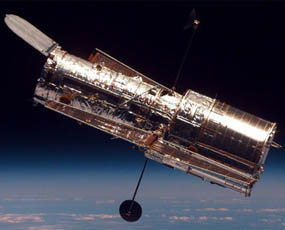 Berlin, Nov 14 : The NASA/ESA Hubble Space Telescope has taken the first visible light snapshot of a planet circling another star.

