On Friday, Serena Williams admitted that she is suffering from obsessive compulsive disorder (OCD). The player who is known for her mental toughness said that she has got many mental issues.
Serena said, “I mean, I have mental issues too, so... I think everyone has mental issues.”
“I get really angry and I'm a perfectionist -- I have a slight case of OCD. Yeah, those are my issues,” she added.
However, she informed that she had not been diagnosed with the disorder by a doctor.
The readers would be very glad to know that on Tuesday, Sony Philippines launched two models of the Vaio P, of which the most attractive feature is its 8-inch ultra wide high-resolution (XGA 1600 x 768) display.
The company claims that its new mini laptops are not netbook but pocket style PCs.
Intel’s Atom Z processor is used by the Vaio P, which has been equipped in it after making it more compact and power efficient than the previous Atom N chip.
On 3rd February, when the National Mission on Education through Information and Communication Technology is launched; the people would also see a $10 laptop (Rs 500) prototype, with 2 GB RAM capacity, would be on display in Tirupati.
The latest $10 laptop project has arrived as a response to the $100 laptop of MIT's Nicholas Negroponte, which he was trying to sell to India. This $10 laptop had been possible due to the efforts put in by students of Vellore Institute of Technology, scientists in Indian Institute of Science, Bangalore, IIT-Madras and involvement of PSUs like Semiconductor Complex.
Zoya Akhtar's directorial debut LUCK BY CHANCE is based on the film industry and its dark side. Farhan Akhtar and Konkona Sen Sharma play lead role in the film.
This movie is not meant for lovers of typical Bollywood masala movie. However intelligent viewers can like it as an Art film. The movie represents various issues related to film industry like exploitation of aspiring actors and actresses by producers and directors, broken dreams, struggle, false hopes etc.
Recent research revealed that genetic variations affect the response of patient to treatment for lymphoblastic leukemia. Researchers believe that these genetic variations explain why some children do not respond to the treatment of this type of blood and bone marrow cancer although about 80 percent of children are cured.
 On Friday, Serena Williams admitted that she is suffering from obsessive compulsive disorder (OCD). The player who is known for her mental toughness said that she has got many mental issues.
 At the Australian open semifi
 The readers would be very glad to know that on Tuesday, Sony Philippines launched two models of the Vaio P, of which the most attractive feature is its 8-inch ultra wide high-resolution (XGA 1600 x 768) display.
 On 3rd February, when the National Mission on Education through Information and Communication Technology is launched; the people would also see a $10 laptop (Rs 500) prototype, with 2 GB RAM capacity, would be on display in Tirupati.
 Zoya Akhtar's directorial debut LUCK BY CHANCE is based on the film industry and its dark side. Farhan Akhtar and Konkona Sen Sharma play lead role in the film.
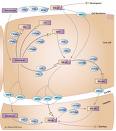 Recent research revealed that genetic variations affect the response of patient to treatment for lymphoblastic leukemia. Researchers believe that these genetic variations explain why some children do not respond to the treatment of this type of blood and bone marrow cancer although about 80 percent of children are cured.

