Washington - So you've resisted the move to Windows Vista? You're not alone. Although Vista is installed on most new PCs delivered today, this much-reviled successor to Windows XP has been a flop by many measures that matter: its uptake by businesses has been slow, complaints from consumers have been rampant, and the word-of- mouth damage has been so severe as to cause Microsoft to hurriedly ready Vista's successor, now expected by the end of this year.
Epson has rolled out its two Full High Definition (HD), 1080p projectors, named Epson EH-TW3000 and EH-TW4000 in the Indian market.
The newly launched high-tech projectors, which are aimed at providing best possible home cinema experience, comes packed with different new features including the 3D LCD and the company’s all new C²Fine panels and enhanced E-TORL lamp.
Seagate along with Advanced Micro Devices (AMD) has unveiled the world’s first public demonstration of next-generation high-speed data transfer ‘Serial ATA 6Gigabit/second’ for bandwidth-hungry desktop and laptop computer applications comprising gaming, streaming video and graphics multimedia.
Washington, Mar 12 : A team of students at the Georgia Institute of Technology has designed a device that allows individuals to constantly compute the amount of calories they burn - even while sleeping.
The device, dubbed HappyHR, is a personal monitor that allows users to measure and compare day-to-day physical and caloric activity.
The name is a reference to the euphoric feeling that follows an intense round of exercise - the `happy hour.'
"It's a completely converged device. It's a single unit that provides complete fitness monitoring and management," said Garrett Langley, 21, a senior in the School of Electrical and Computer Engineering (ECE) who spearheaded the project.
London, Mar 12 : The days of waiting hours to charge a mobile phone could soon be history, thanks to US researchers, who have created a revolutionary battery that recharges in seconds instead of several hours.
Massachusetts Institute of Technology engineers have created a kind of beltway that allows for the rapid transit of electrical energy through a well-known battery material, an advance that could usher in smaller, lighter batteries, reports Nature journal.
 Washington - So you've resisted the move to Windows Vista? You're not alone. Although Vista is installed on most new PCs delivered today, this much-reviled successor to Windows XP has been a flop by many measures that matter: its uptake by businesses has been slow, complaints from consumers have been rampant, and the word-of- mouth damage has been so severe as to cause Microsoft to hurriedly ready Vista's successor, now expected by the end of this year.
 Epson has rolled out its two Full High Definition (HD), 1080p projectors, named Epson EH-TW3000 and EH-TW4000 in the Indian market.
 Oslo - Norwegia
 Seagate along with Advanced Micro Devices (AMD) has unveiled the world’s first public demonstration of next-generation high-speed data transfer ‘Serial ATA 6Gigabit/second’ for bandwidth-hungry desktop and laptop computer applications comprising gaming, streaming video and graphics multimedia.
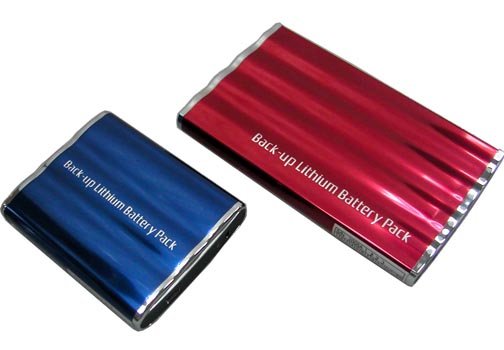 London, Mar 12 : The days of waiting hours to charge a mobile phone could soon be history, thanks to US researchers, who have created a revolutionary battery that recharges in seconds instead of several hours.

