Tokyo - Fuji Heavy Industries Ltd incurred a net loss of 19.2 billion yen (214.7 million dollars) in the October-December quarter because of a strong yen and slow sales amid the global economic downturn, the company said Wednesday.
The conglomerate - which manufactures Subaru cars as well as trains, industrial products and aerospace technology - reported 10 billion yen in profit during the same quarter a year before.
Tokyo - Sharp Corp expected to see an operating loss of about 10 billion yen (111.82 million dollars) in the current fiscal year because of declining sales of liquid-crystal-display televisions, Japanese media reports said Wednesday.
It would be the first operating loss Sharp would report since 1953 when it began disclosing operating earnings, according to the Japanese business daily The Nikkei.
The Japanese electronics company earlier had projected 130 billion yen in operating profit for the year than ends March 31.
Tokyo - Mitsubishi is showcasing a zero-emission i MIEV Sport Air concept car, built on the basis of the i MIEV minicar already available in Japan, at the upcoming Geneva Motor Show in March.
Teaser images released by the Japanese car maker show a two-door coupe-style vehicle with pronounced alloys emphasizing the sporty image.
Almost the entire roof is made of glass featuring integrated solar cells, giving the interior plenty of light and extra energy to the lithum-ion batteries positioned in the floor.
New York - Japan gifted Seiko clocks to each of the UN Security Council members to ensure punctuality at meetings, a demand that has eluded the organization responsible for peace and security around the world.
As Ambassador Yukio Takasu on Tuesday handed the clocks to his 14 colleagues on the council, he assured them that the aim was not to promote Japanese products. The popular Seiko watches and clocks are appreciated for their accuracy and the name Seiko means precision and success.
Tokyo - Japanese workers put in an average of 1,792 hours in 2008, a fall of 0.9 per cent from a year before, the government said Tuesday.
The average work hours per employee at Japanese firms with at least five employees fell below 1,800 hours for the first time since 1990, when the government began taking data, the labour ministry said.
The average work hours shortened in the reporting year since the global recession slowed business operations, especially in the latter half of the year, the ministry said.
 Tokyo - Fuji Heavy Industries Ltd incurred a net loss of 19.2 billion yen (214.7 million dollars) in the October-December quarter because of a strong yen and slow sales amid the global economic downturn, the company said Wednesday.
 Tokyo - Sharp Corp expected to see an operating loss of about 10 billion yen (111.82 million dollars) in the current fiscal year because of declining sales of liquid-crystal-display televisions, Japanese media reports said Wednesday.
 Tokyo - Mitsubishi is showcasing a zero-emission i MIEV Sport Air concept car, built on the basis of the i MIEV minicar already available in Japan, at the upcoming Geneva Motor Show in March.
 Tokyo - The Tokyo market bounced back Wednesday, snapping a three-day losing streak thanks to overnight rises on Wall Street.
 New York - Japan gifted Seiko clocks to each of the UN Security Council members to ensure punctuality at meetings, a demand that has eluded the organization responsible for peace and security around the world.
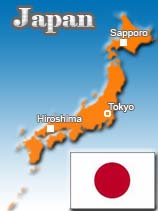 Tokyo - Japanese workers put in an average of 1,792 hours in 2008, a fall of 0.9 per cent from a year before, the government said Tuesday.

