Now, A 'Pacemaker' For The Brain
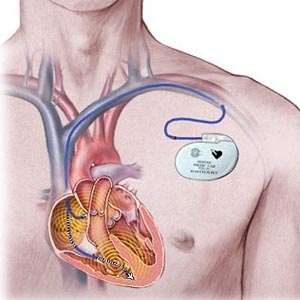 Problems like depressive disorder or Parkinson's may be helped by stimulating certain brain regions with controlled precision, says a study, encouraging researchers to make a pacemaker for the brain.
But because controlling that stimulation presently lacks precision, over-stimulation is a serious concern -- losing some of its therapeutic benefits for the patient over time.
A Tel Aviv University (TAU) team, part of a European consortium, is delving deep into human behavior, neurophysiology and engineering to make a chip, which that can help physicians wire computer applications and sensors to the human brain.
The chip will provide deep brain stimulation accurately where and when it's required.
Matti Mintz, a TAU professor in psychology is concentration on the behavioural-physiological aspects of the study.
He and his fellow workers are working in the direction of a chip, which could help treat some illnesses of the mind in just a few years.
The methodology of the research group is straightforward - they record activity using electrodes implanted in diseased areas of the brain.
Based on an analysis of this activity, they develop algorithms to simulate healthy neuronal activity which are programmed into a microchip and fed back into the brain.
For now, the chip, called the Rehabilitation Nano Chip (or ReNaChip), is hooked up to tiny electrodes which are implanted in the brain.
But as chips become smaller, the ReNaChip could be made small enough to be "etched" right onto the electrodes themselves, said a university release.
However, for therapeutic purposes, only the electrodes will be inserted into the brain.
"The chip itself can be implanted just under the skin, like pacemakers for the heart," says Mintz, who is currently conducting experiments on animal models, "ensuring that the brain is stimulated only when it needs to be." (With Inputs from Agencies)

