Now, A Simple Urine Test To Detect Autism
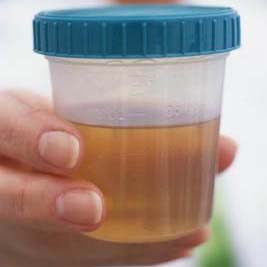 A new research has discovered that a simple urine examination could help detect autism owing to a different chemical profile that kids suffering from this condition have.
Jeremy Nicholson, professor and study co-author at London's Imperial College (IC), said, "Autism is a condition that affects a person's social skills, so at first it might seem strange that there's a relationship between autism and what's happening in someone's gut."
"Autism affects many different parts of a person's system and our study shows that you can see how it disrupts their system by looking at their metabolism and their gut bacteria," Prof. Nicholson added.
People having autism have different symptoms, but they normally suffer troubles with communication and social skills like understanding other people's emotions and talking and eye contact.
The autistic people have a different makeup of bacteria in their guts as compared to non-autistic people.
The distinctive urinary metabolic fingerprint for autism found in the research could form the basis of a non-invasive examination, which might help diagnose autism in advance.
Presently, kids are assessed for autism through a long process involving different tests, which explore the kid's social interaction, communication and imaginative skills.
Early involvement can greatly improve the progress of autistic kids but it is currently difficult to establish a firm diagnosis when children are less than 18 months of age, although it is likely that changes may occur much earlier than this.
The study researchers found the solution by making use of H NMR Spectroscopy to analyze the urine of three groups of kids aged between 3 and 9. Around 39 kids who had previously been diagnosed with autism, 28 non-autistic siblings of children with autism, and 34 children who did not have autism who did not have an autistic sibling. (With Inputs from Agencies)

