Washington - The space shuttle Discovery landed safely at the Kennedy Space Centre in Florida on Saturday.
Commander Lee Archambault guided the shuttle to landing at 1914 GMT, ending the shuttle's 13-day mission to the International Space Station.
The landing had been delayed by around an hour and a half due to poor weather from an originally scheduled 1740 GMT touchdown, due to thick cloud cover.
Washington, March 28 : A long-term research has concluded that the shell of a particular snail has dramatically increased in size, during less than a century, thus providing a clear illustration of how fast and effectively change can occur.
The research, which began in 1915, was completed by a team of biologists at the University of Pennsylvania.
It determined that a snail making its home in the northwest Atlantic Ocean around Mount Desert Island, has experienced a dramatic increase in the size of its shell during less than a century.
London, March 28 : Scientists have reported the discovery of a methane-producing mineral on Mars.
According to a report in Nature News, the evidence for the existence of the mineral, known as serpentine, was found by Bethany Ehlmann, a PhD student at Brown University in Providence, Rhode Island.
Ehlmann used a spectrometer on the Mars Reconnaissance Orbiter to identify two small outcrops of the mineral.
London, March 28: An American firm is planning to grow the first flowers on the Moon, in a proposed greenhouse on the lunar surface.
According to a report in New Scientist, the company in question is engineering firm Paragon Space Development, which has designed habitats for plants and animals living in microgravity.
The firm plans to build a greenhouse to fly to the moon, aboard a lunar lander designed by Odyssey Moon, a competitor for the Google Lunar X Prize, a 30 million dollars contest to send an unmanned lunar rover to the moon.
London, March 28 : Researchers at Leiden University in the Netherlands have come up with an artificial version of the buttery coating that protects and nurtures a foetus'''' developing skin.
Joke Bouwstra and Robert Rissman say that their artificial "baby butter" may find a use outside the womb, in speeding up wound healing and treating eczema.
Natural vernix caseosa contains a mixture of fatty compounds that waterproof the foetus. It also contains dead cells called corneocytes, which store large amounts of water and ensure that the foetus does not get dehydrated.
The researchers point out that vernix may also act as a barrier to infections, reports New Scientist magazine.
 Washington - The space shuttle Discovery landed safely at the Kennedy Space Centre in Florida on Saturday.
 Washington - The space shut
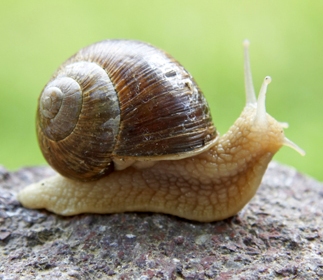 Washington, March 28 : A long-term research has concluded that the shell of a particular snail has dramatically increased in size, during less than a century, thus providing a clear illustration of how fast and effectively change can occur.
 London, March 28 : Scientists have reported the discovery of a methane-producing mineral on Mars.
 London, March 28: An American firm is planning to grow the first flowers on the Moon, in a proposed greenhouse on the lunar surface.
