Stock Markets
 Tokyo - Tokyo stocks opened lower Thursday on lingering concerns over the outlook of the US and Japanese economies.
 Washington - Major US stock indices improved on Wednesday on the back of gains in energy and metal shares, while new mortgage- market fears weighed heavily on financial institutions.
 Hong Kong - Hong Kong stocks rebounded by 2.1 per cent Wednesday on hopes that China may announce a package to help the mainland economy.
 back of good buying action witnessed in pivotal stocks.
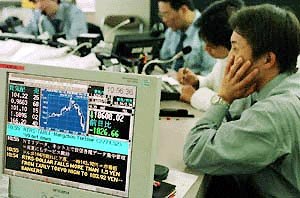 Tokyo - Tokyo stocks extended losses Wednesday after overnight declines in the US market.
TopNews Hindi
- FSSAI की शराब कार्रवाई: मैकडॉवेल्स नंबर 1, Old Monk, Antiquity Blue, Royal Challenge पर बैन
- Karuppu, Parasakthi, Thaai Kizhavi, Blast and Kara Among Best Tamil Movies for 2026
- Anupama, YRKKH, Vasudha, Tum Se Tum Tak: सबसे ज़्यादा देखे जाने वाले धारावाहिक
- 2026 FIFA World Cup Current Rankings and Betting Odds for Sports Betting Fans
- JEE Main 2026: Exam Dates, Eligibility, Syllabus जेईई मेन 2026 परीक्षा की तारीखें, योग्यता, सिलेबस

