Technology News

Nuclear-powered passenger aircraft ‘to transport millions’ in future

London, Oct 28 : A scientist has predicted that later this century, nuclear-powered aircraft will be transporting millions of passengers around the world.

According to a report in The Times, the scientist in question is Ian Poll, Professor of Aerospace Engineering at Cranfield University, and head of technology for the Government-funded Omega project.

Because the aircraft will no longer need to land to refuel, it might mean non-stop flights from London to Australia or New Zealand.

The flights will also produce no carbon emissions and therefore make no contribution to global warming.

Professor Poll is calling for a big research programme to help the aviation industry convert from fossil fuels to nuclear energy.

Chandrayaan-1 enters deep space

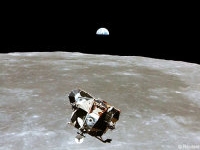
Chandrayaan-1Bangalore, Oct 27 : Chandrayaan-1 spacecraft, India''s maiden moon mission, on Sunday crossed the 1,50,000 km distance mark from Earth and entered deep space.

Indian Space Research Organisation (ISRO), in a statement on Sunday in Bangalore, said that the milestone was reached after the successful completion of the spacecraft''s third orbit raising manoeuvre.

ISRO also said that in the coming few days more orbit raising manoeuvres have been planned to take Chandrayaan-1 towards the Moon.

Now a ‘sat nag’ system that will inform drivers against bad driving

London, October 27: A backseat driver satellite navigation system that will inform drivers when they are rushing up, or are out of lanes, is being developed.

The Advanced Driver Assistance Systems (ADAS) will not only be a tour guide recommending visit-worthy restaurants, but will also direct the driver to change the gear in appropriate time to maximise fuel economy.

It will flash a warning against danger of collision or possible damage to the vehicle, too, by providing a 3-D view of the route in front, and specifying details regarding gradients, obstacles and road width.

The computer helper: Don't get scammed

Washington - Online scammers are out in full force these days. They'll try to dupe you by e-mail or through websites. And they typically want one of two things: your money or your personal information. To make sure you don't give them either, you need to keep abreast of some of the tricks they're using. Read on to learn about a few.

Q: I received an e-mail from what appears to be my credit card company. The e-mail says that my credit card was used in a number of fraudulent transactions, and a few were listed that do appear fraudulent. There's a Word attachment that the company wants me to fill out and return. Is this a scam?

Using Internet can make you a snappy thinker

London, Oct 26 : The Internet improves people’s ability to make snap decisions and filter large amounts of information, according to a new study.

In the study, Gary Small, director of the memory and ageing research centre at the University of California, Los Angeles, found that the brains of those tested were markedly more active when carrying out Internet searches than when reading books.

However, the stimulation was particularly in the areas that control decision-making and complex reasoning. Areas associated to abstract thinking and empathy showed virtually no increase in stimulation.

Computer game graphics reveal vortex physics

London, Oct 26 : State-of-the-art computer graphic systems developed for movies and games have made it possible to model in unprecedented detail the swirling rings and tubes that are a characteristic of turbulent vortices.

According to a report in New Scientist, the models will help explain the forces that govern vortex decay.

This could lead to ways to control them in places where they cause problems, such as over aircraft wings or in blood vessels.

Computer graphics technology for games and movies has progressed to the point that it can render photoreal simulations of flowing liquids.

Pages