Health Update
 Recent study revealed that women who have diabetes during pregnancy have double risk of developing depression as compared to pregnant women without depression.
  Modi government is gearing up to fight Hepatitis-B outbreak which has claimed 37 lives according to official number. However the State Congress spokesman and the former leader of the Opposition in the Assembly, Arjun Modhvadia, claimed that the epidemic has taken life of not less than 60 people in Modasa alone.
 The Union minister for health and family welfare, Anbumani Ramadoss said that social stigma attached to mental illness can be removed only in long run.
  Recent research revealed that little progress has been made in providing facilities to workers to tackle repetitive strain injuries (RSI) in the UK. Findings indicated that
  Arthritis is one of the leading causes of disability and autoimmune diseases.
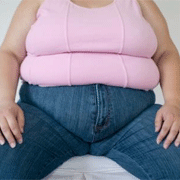 Recent study showed the role played by FTO gene in making a person fat or lean. Research team led by Dr Ulrich Ruther, from the University of Dusseldorf in Germany used animal models to determine how this gene influences weight gain.
TopNews Hindi
- FSSAI की शराब कार्रवाई: मैकडॉवेल्स नंबर 1, Old Monk, Antiquity Blue, Royal Challenge पर बैन
- Karuppu, Parasakthi, Thaai Kizhavi, Blast and Kara Among Best Tamil Movies for 2026
- Anupama, YRKKH, Vasudha, Tum Se Tum Tak: सबसे ज़्यादा देखे जाने वाले धारावाहिक
- 2026 FIFA World Cup Current Rankings and Betting Odds for Sports Betting Fans
- JEE Main 2026: Exam Dates, Eligibility, Syllabus जेईई मेन 2026 परीक्षा की तारीखें, योग्यता, सिलेबस

