IBM aims at making x86-based servers more scalable
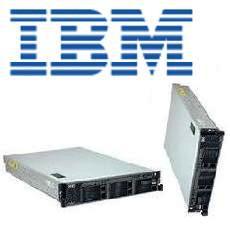 With the aim of making x86-based servers more scalable in virtualized environments, IBM has now permitted memory to scale independently of the rest of the system.
Tuesday, the CeBIT trade show in Germany was used by IBM to release its novel new eX5 line of servers. These servers enable memory to scale to up to four times that of existing servers.
As per Roland Hagan, vice president of System X servers for the vendor, "The new server line comes at a time when an increase in the proliferation of servers to meet new customer workloads, especially for virtualization, has become the major contributor to the increase in data center power consumption."
The reason for this requirement of increased memory for virtualization as the number of virtual servers and appliances increases, requiring additional processors and servers in order to increase the amount of memory available.
The MAX5 architecture, which allows the memory in eX5 servers to scale to up to six times existing servers, was introduced by IBM in order to widen memory scalability without increasing the number of servers. The company is doing this by the means of a drawer in the server chassis with 32 DIMM slots in 4U and 2U servers, as well as 24 DIMM slots in blade servers.
Furthermore, solid state disk drives (SSDs) are also being introduced by UDM with its eX5, with a few servers able to be configured with up to eight 200-GB SSDs for a total storage capacity of 1.2 TBs.
Via this feature, the customers are able to run four sockets during the day and two sockets at night to scrap power and software licensing costs.
It is being assumed that it will be in the second and third quarters of this year when the new 4-socket servers based on the eX5 architecture would be unveiled. IBM also is mulling to come out with a new family of 2-socket and
4-socket Blade Center blade servers, the HX5, based on the eX5 platform.
Lenovo, under an agreement signed with IBM, has the right to produce servers based on IBM technology; however, that agreement does not extend to the eX5 platform.
TopNews Hindi
- FSSAI की शराब कार्रवाई: मैकडॉवेल्स नंबर 1, Old Monk, Antiquity Blue, Royal Challenge पर बैन
- Karuppu, Parasakthi, Thaai Kizhavi, Blast and Kara Among Best Tamil Movies for 2026
- Anupama, YRKKH, Vasudha, Tum Se Tum Tak: सबसे ज़्यादा देखे जाने वाले धारावाहिक
- 2026 FIFA World Cup Current Rankings and Betting Odds for Sports Betting Fans
- JEE Main 2026: Exam Dates, Eligibility, Syllabus जेईई मेन 2026 परीक्षा की तारीखें, योग्यता, सिलेबस

