Arctic Ocean sea ice falls to its second lowest level since 1979
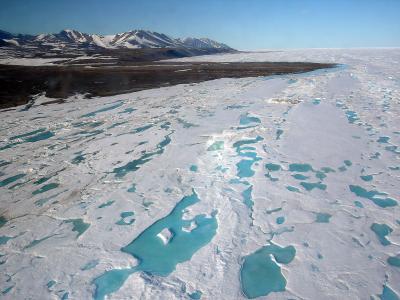 According to a new research, the Arctic Ocean sea ice cover has fallen to its second lowest level since 1979, when the researchers began measuring the cover thorough satellite imagery.
The data released by University of Colorado Boulder's National Snow and Ice Data Center showed that the ice extent fell to 1.67 million square miles on September 9. It also showed that this year's minimum cover is more than 1 million square miles below the 1979-2000 monthly average of the cover area for September.
NSIDC Director Mark Serreze, also a professor in CU-Boulder's geography department said, "Every summer that we see a very low ice extent in September sets us up for a similar situation the following year. The Arctic sea ice cover is so thin now compared to 30 years ago that it just can't take a hit anymore. This overall pattern of thinning ice in the Arctic in recent decades is really starting to catch up with us."
He also said that in the year 2007, when lowest Arctic sea ice was recorded, the winds brought more warm winds over the area than usual, resulting in melting of more ice and also pushed ice chunks into smaller areas. He noted that even as this year recorded the second lowest ice cover, but no such weather conditions were recorded.
CU-Boulder's NSIDC is set to release a full analysis of the 2011 results as well as comparison with earlier years.
TopNews Hindi
- FSSAI की शराब कार्रवाई: मैकडॉवेल्स नंबर 1, Old Monk, Antiquity Blue, Royal Challenge पर बैन
- Karuppu, Parasakthi, Thaai Kizhavi, Blast and Kara Among Best Tamil Movies for 2026
- Anupama, YRKKH, Vasudha, Tum Se Tum Tak: सबसे ज़्यादा देखे जाने वाले धारावाहिक
- 2026 FIFA World Cup Current Rankings and Betting Odds for Sports Betting Fans
- JEE Main 2026: Exam Dates, Eligibility, Syllabus जेईई मेन 2026 परीक्षा की तारीखें, योग्यता, सिलेबस

