Paris - French Foreign Minister Bernard Kouchner on Thursday said European nations were considering imposing sanctions against Russia as a result of its actions in Georgia.
Addressing journalists three days before an emergency EU summit in Brussels, Kouchner said "sanctions were being considered, as well as other means" to address the issue, but he did not specify.
"I, myself, would not anticipate sanctions (being imposed), while the meeting has not yet taken place," said Kouchner. France is currently president of the Union and has been at the forefront of the EU's attempts to resolve the crisis.
It was the first time France has brought up the possibility of sanctions against Moscow.
Vienna - At a special meeting of the Organization for Security and Co-operation in Europe (OSCE) that started on Thursday, Georgia's Foreign Minister was set to address Russia's recognition of Georgian separatist regions.
The Permanent Council, the OSCE's decision-making body, would hear Ekaterine Tkeshelashvili's speech and discuss Moscow's recognition of independence of South Ossetia and Abkhazia, a source close to the OSCE said.
The body would probably also deliberate on the modalities of sending up to 100 additional observers to Georgia, he said.
London, Aug. 28 : Russian-backed paramilitaries are “ethnically cleansing” villages on Georgian soil, The Times quoted refugees and officials, as saying.
South Ossetian militiamen have torched houses, beaten elderly people and even murdered civilians in the lawless buffer zone set up by the Russian Army just north of Gori.
The violence, close to the border with the breakaway republic recognized by Russia this week as independent, has prompted a new wave of refugees into Gori, 40 miles north of Tbilisi.
Moscow/Brussels - Seventeen years on from the Cold War, Europe and Russia are again on a collision course.
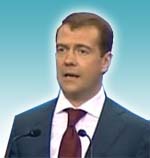
In the first 100 days of Dmitry Medvedev's presidency Europe seized on his liberal rhetoric as the promise of burgeoning economic possibilities. But the war between Georgia and Russia that erupted in the next 10 days sent shockwaves through Europe.
And with Medvedev's decision to recognize the independence of Georgia's two rebel regions on Tuesday - day 111 of his tenure - experts say relations hit a historical turning-point.
That act routed Russia's last advocates in Europe, uniting Western powers in scandalized and impotent demands for Russia to "reverse" its policy.
Washington - Russia's recognition of South Ossetia and Abkhazia violates Georgia's sovereignty, the top industrialized democracies said Wednesday.
"Russia's recognition of the independence of South Ossetia and Abkhazia violates the territorial integrity and sovereignty of Georgia," said the G7, which includes Britain, Canada, France, Germany, Italy, Japan and the United States.
The G7 called on Russia to pull its troops back into the disputed breakaway provinces, out of Georgian territory and adhere to an August 11 ceasefire agreement.
Moscow - President Dmitry Medvedev was meeting his Chinese counterpart Hu Jintao and the leaders of four ex-Soviet Central Asian nations on Wednesday in a bid to secure support for Russia its standoff with the West over Georgia.
Medvedev flew to the capital of Tajikistan for two days of consultations with his partners in the Shanghai Cooperation Organization (SCO) as Western leaders renewed their condemnation of Russia's diplomatic recognitition of breakaway regions of Georgia.
The SCO was formed in 2001 as a counterweight to NATO's growing influence in the region.