Brussels - Ah, the style of an Italian Ferrari, the solidity of a German Mercedes, the flair of a French Renault!
The car industry is not only Europe's pride and joy, it provides income for some 12 million families and last year generated a combined turnover of 551 billion euros (700 billion dollars), or about 5 per cent of the continent's gross domestic product (GDP).
One in every three cars sold around the world is European.
But now, caught between the global credit crunch, a recession and the need to make greener vehicles, Europe's automobile industry says it is facing its most difficult moment since the oil crisis of the early 1970s.
Paris - The European Union Council Presidency condemned on Monday in Paris the "increase of clashes in Georgia," expressing its "concern over the security of the international observers."
Putting observers in danger cannot be accepted, the French-led presidency said, calling on all sides of the dispute in the South Caucasus to hold the agreement on a ceasefire.
Brussels - Contrary to popular belief, the European Union's expansion towards central and Eastern Europe has not sparked a massive influx of Polish plumbers or Bulgarian builders to the bloc's richest nations, figures due out Tuesday show.
According to the European Commission's latest report, more and more workers from the EU's 12 newest member states have been relocating to Germany or Britain since being allowed to move freely around the 27-member bloc.
However, their numbers remain small in relative terms. In fact, the EU's richer nations continue to receive a far higher share of foreign immigrants from the developing world.
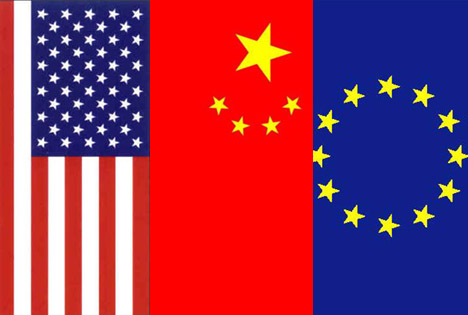
Brussels - The European Union, China and the United States said Monday they were committed to creating common safety standards for toys and other consumer products.
While "we may come from different angles" on safety, "we are moving in the same direction," said Meglena Kuneva, the EU's consumer protection commissioner, after a meeting in Brussels with top consumer protection officials from the US and China.
"If we speak with one voice... industry will listen," said Nancy Nord, head of the US Consumer Product Safety Commission.
London, Nov 16 : The small balls of chemical pesticide and deodorant that we know as mothballs will soon no longer be available for use because of a new EU restriction.
The mothballs are composed of a chemical called as naphthalene and EU has put a restriction on its usage, in order to ensure greater protection of health and the environment.
The new regulations are part of the EU’s REACH (Registration, Evaluation and Authorization of Chemicals) directive, which regulates chemical use in member countries.
John Lewis, the Oxford Street department stores in central London, admitted that it no longer stocks traditional mothballs.