Technology News

Old growth forests are valuable “carbon sinks”

Washington, September 11 : A new analysis has suggested that old growth forests are usually valuable “carbon sinks”, and they continue to absorb carbon dioxide (CO2) from the atmosphere and mitigate climate change for centuries.

The analysis of 519 different plot studies, by researchers from Oregon State University (OSU) and several other institutions, found that about 15 percent of the forest land in the Northern Hemisphere is unmanaged primary forests with large amounts of old growth, and that rather than being irrelevant to the Earth’s carbon budget, they may account for as much as 10 percent of the global net uptake of carbon dioxide.

May 12 China earthquake could trigger another major quake in the region

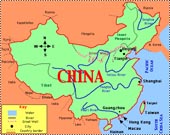
China fears quake lakes bursting in devastated Sichuan Washington, September 11 : A team of researchers have determined that the magnitude 7.9 earthquake in China’s Sichuan province on May 12 has brought several nearby faults closer to failure and could trigger another major quake in the region.

Researchers analyzing the May 2008 Wenchuan earthquake have found that geological stress has significantly increased on three major fault systems in the region.

Vietnam-Germany University opens in Ho Chi Minh City

VietnamHanoi  - A joint Vietnamese-German university, the first such collaboration between the two countries, has opened in Ho Chi Minh City, its director said Thursday.

Wolf Rieck, president of the Vietnam-Germany University, said the school would initially offer degrees in civil and electrical engineering. The university is owned by the Vietnamese government.

"This is only the start," Rieck said. "The master plan of the university follows the line that we build up master courses in business administration, health care and so on."

Feasible emission scenarios identified that could keep CO2 below climate threatening levels

Washington, September 11 : NASA researchers have identified feasible emission scenarios that could keep carbon dioxide (CO2) below levels that some scientists have called dangerous for climate.

When and how global oil production will peak has been debated, making it difficult to anticipate emissions from the burning of fuel and to precisely estimate its impact on climate.

To better understand how emissions might change in the future, Pushker Kharecha and James Hansen of NASA’s Goddard Institute for Space Studies in New York considered a wide range of fossil fuel consumption scenarios.

Historic 1843 stellar outburst was a new type of star explosion

Washington, September 11: New analysis has revealed that the historic 1843 stellar outburst was in fact, a new type of star explosion that is fainter than a typical supernova and does not destroy the star, and may be common in the universe.

Astronomer Nathan Smith from the University of California (UC), Berkeley, has determined that Eta Carinae’s historic 1843 outburst was, in fact, an explosion that produced a fast blast wave similar to, but less energetic than, a real supernova.

Eta Carinae (ç Car) is a massive, hot, variable star visible only from the Southern Hemisphere, and is located about 7,500 light years from Earth in a young region of star birth called the Carina Nebula.

‘Bionic arm’ women begins feeling sensation in lost limb

London, Sept 11 : A woman marine, who was given a "bionic arm" controlled by thought, has got an odd side-effect of her surgery—she can feel hot and cold sensations in her lost limb.

Claudia Mitchell, who has been nicknamed the ‘Bionic Woman’, lost her arm in a 2004 motorcycle accident.

She volunteered to be fitted with the limb in 2006 after she got frustrated with a standard prosthetic, and thus became the first woman to receive a bionic arm, fitted with a pioneering surgical process called ''targeted reinnervation''.

So, the surgeons took nerves from her shoulder and embedded them under muscle in her chest, enabling her to control her hand’s movement by thought via tiny electrical impulses.

Pages