Satellite To Study Solar System's Outer Limits
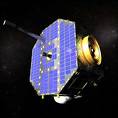 A NASA spacecraft is all set to be launched on Sunday with the aim to study the outermost reaches of the solar system with minutest of details.
On Sunday, this spacecraft dubbed as the Interstellar Boundary Explorer, or IBEX, satellite will be launched from a site at the Kwajalein Atoll in the south Pacific. Following the launch it will function for two years in high-Earth Orbit.
A huge protective bubble around the solar system called the heliosphere is formed by the solar wind, a stream of charged particles from the Sun. a shock at the edge of this bubble is formed where the in the interstellar space, the solar winds collides with the gas and the dust.
The motive behind designing IBEX is to detect atoms that are heated and thrown off from this boundary, which screens the solar system from hazardous charged particles called cosmic rays that come from elsewhere in the Milky Way.
At a press briefing on Friday Nathan Schwadron, IBEX's head of science operations said, “These boundaries really protect us from the fairly harsh galactic environment.”
Team member Herb Funsten of Los Alamos National Laboratory, said in a statement, “Every six months, we will make global sky maps of where these atoms come from and how fast they are traveling. From this information, we will be able to discover what the edge of our bubble looks like and learn about the properties of the interstellar cloud that lies beyond the bubble.”
TopNews Hindi
- FSSAI की शराब कार्रवाई: मैकडॉवेल्स नंबर 1, Old Monk, Antiquity Blue, Royal Challenge पर बैन
- Karuppu, Parasakthi, Thaai Kizhavi, Blast and Kara Among Best Tamil Movies for 2026
- Anupama, YRKKH, Vasudha, Tum Se Tum Tak: सबसे ज़्यादा देखे जाने वाले धारावाहिक
- 2026 FIFA World Cup Current Rankings and Betting Odds for Sports Betting Fans
- JEE Main 2026: Exam Dates, Eligibility, Syllabus जेईई मेन 2026 परीक्षा की तारीखें, योग्यता, सिलेबस

