Tokyo - India wants to increase exports to Japan and for the East Asian economic giant to invest more in its businesses, it was announced Wednesday at the conclusion of an economic partnership agreement.
Indian Prime Minister Manmohan Singh told business leaders in Tokyo that he hoped the agreement would boost exports of Indian goods and services to Japan through the removal of tariff barriers.
Singh, who is on a three-day visit, planned to sign a bilateral agreement with his Japanese counterpart Taro Aso later in the day on strategic security cooperation as well as trade and economic issues to strengthen partnership relations.
Tokyo, Oct. 22: In a move that could change the geopolitical dynamics of Asia, both India and Japan have decided to create a comprehensive framework for the enhancement of security cooperation.
It will include a fight against terrorism and transnational crimes, safety of transport, cooperation between coast guards and information exchange and policy coordination on regional affairs in the Asia Pacific region and on long-term strategic and global issues.
It was also agreed that bilateral consultation would be conducted to promote counter-terrorism cooperation through joint working group between the relevant government offices including the ministries of foreign affairs.
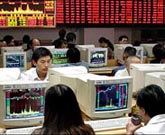
Tokyo - Tokyo stocks plunged Wednesday as investors worried about the grim outlook for Japanese firms' earnings.

The Nikkei 225 Stock Average tumbled 631.56 points, or 6.79 per cent, to end 8,674.69.
The broader Topix index of all first-section issues also lost 67.41 points, or 7.05 per cent, to 889.23.
Japan's automaker Mitsubishi Motors Corp expected a 7.6-per-cent fall in sales in the year's first six months through September due to slowing demand in the United States and Europe, the company said.
Tokyo - Japan's central bank has supplied 50.17 billion dollars in its first unlimited dollar-supplying money market operation, the bank said Wednesday.
The Bank of Japan's move to lend dollar funds at a fixed rate for one month was intended to ease the stress in the short-term money markets.