Sophisticated space observatories – Herschel and Planck – ready for blast off
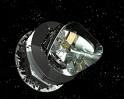 The two most sophisticated space/astronomical observatories – Herschel and Planck – will be launched in this month by the European Space Agency (ESA). The deep space telescopes – Herschel and Planck – will be launched deep into space on the European Ariane-5 rocket on May 14, from Guiana Space Centre at Kourou, French Guiana.
The two advanced observatories – Herschel and Planck – will orbit into deep space beyond the Moon’s orbit to probe into the history of the Universe aand the development of stars and galaxies. According to the astronomers involved in the project, Herschel and Planck will completely change our present theories on origin of stars, universe, and galaxies.
The chief of project, Prof. David Southwood has said that the project (Herschel and Planck) will “change our view of the universe and where we have all come from – we are talking about the origin of galaxies and stars and even life itself”.
The Herschel and Planck will try to find the answer of the important questions, such as where did stars come from, how did the universe and galaxies come into being.
Christened after the astronomer who discovered Uranus, William Herschel – the 7.5m Herschel is set to be the largest telescope satellite ever launched into space. The Herschel features a mirror of 3.5m (11ft) in diameter, bigger than even the Hubble space telescope’s mirror of 2.5m in diameter. The ESA has used a ceramic material called Silicon Carbide (SiC) to build Herschel's primary mirror. The Herschel observatory will focus its study on – “Infrared Radiation” from galaxies, stars, planets and comets; “Dust” from dying stars; “Physical/Chemical Composition” of comets and planets in solar system; and “Life Supporting” elements in Universe.
Getting its name from the German physicist, known as the father of quantum mechanics, Max Planck – the Planck satellite observatory is also equipped with a powerful mirror. The carbon fiber reinforced plastic (CFRP), lightweight composite often used in making satellite radio antennas and terrestrial boats, has been used to build the mirror of Planck. The Planck will probe into the period immediately after the Big Bang.
According to astronomers, the focus of the Planck’s probe will be on “the minute fluctuations in the background 'echo' left over from the Big Bang - called Cosmic Microwave Background – to capture the finest details about the origin of the universe”.
The Herschel and the Planck will head independently towards the L2 Lagrangian point of the Sun-Earth system, after separation from the rocket. The rocket will unleash Herschel half an hour after the launch, while Planck will be released a couple of minutes after Herschel. The total cost of the project is approximately €1.9 billion (£1.7 billion).
TopNews Hindi
- FSSAI की शराब कार्रवाई: मैकडॉवेल्स नंबर 1, Old Monk, Antiquity Blue, Royal Challenge पर बैन
- Karuppu, Parasakthi, Thaai Kizhavi, Blast and Kara Among Best Tamil Movies for 2026
- Anupama, YRKKH, Vasudha, Tum Se Tum Tak: सबसे ज़्यादा देखे जाने वाले धारावाहिक
- 2026 FIFA World Cup Current Rankings and Betting Odds for Sports Betting Fans
- JEE Main 2026: Exam Dates, Eligibility, Syllabus जेईई मेन 2026 परीक्षा की तारीखें, योग्यता, सिलेबस

