NASA Spacecraft To Soar Over Mercury
On Wednesday, NASA informed that a US space probe will fly over Mercury with the 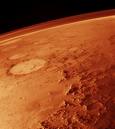 aim to click photographs of the solar system’s smallest planet, in the second of the three planned passes.
On Monday, the spacecraft MESSENGER (MErcury Surface, Space ENvironment, GEochemistry and Ranging), will fly over the planet at an altitude of 201 kilometers (125 miles), while its camera takes more than 1,200 images of the planet’s surface.
Though Mercury is quite close to Earth, its nearness to the Sun that makes it the most mysterious planet of the solar system; that includes the Sun's enormous gravitational pull, and massively high levels of radiation.
The mission's principal investigator from the Carnegie Institution of Washington, Sean Solomon reported, “The results from MESSENGER's first fly-by of Mercury resolved debates that are more than 30 years old. This second encounter will uncover even more information about the planet.”
During the month of January this year, the MESSENGER first flew over Mercury, and in September 2009, it will make its final pass. The sun would have been orbited nearly 15 times by the MESSENGER till then, which would have covered eight billion kilometers.
Louise Prockter, instrument scientist for the spacecraft's Mercury Dual Imaging System at the Johns Hopkins University Applied Physics Laboratory, in Laurel, Maryland informed, “Next week's trip hopes to investigate the opposite side of the planet than the one seen on the first visit.”
The probe is expected to get back with more answers related to the physical processes that rule over Mercury’s atmosphere. The scientist and observers also hope that the probe will get back with additional information about the charged particles located around the planet's dynamic magnetic field.
In order to measure the Mercury’s topography, the probe has been equipped with an altimeter, and this will let the scientists to correlate precise topography measurements with high-resolution images of the planet's surface, for the very first time.
TopNews Hindi
- FSSAI की शराब कार्रवाई: मैकडॉवेल्स नंबर 1, Old Monk, Antiquity Blue, Royal Challenge पर बैन
- Karuppu, Parasakthi, Thaai Kizhavi, Blast and Kara Among Best Tamil Movies for 2026
- Anupama, YRKKH, Vasudha, Tum Se Tum Tak: सबसे ज़्यादा देखे जाने वाले धारावाहिक
- 2026 FIFA World Cup Current Rankings and Betting Odds for Sports Betting Fans
- JEE Main 2026: Exam Dates, Eligibility, Syllabus जेईई मेन 2026 परीक्षा की तारीखें, योग्यता, सिलेबस

