Myanmar pledges reform, free and fair general elections in 2010
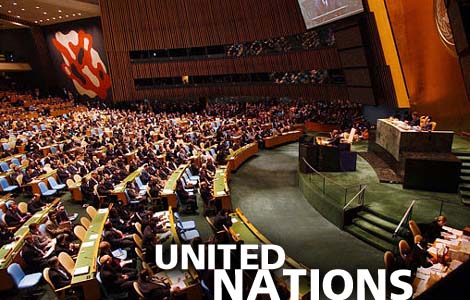 New York - Myanmar put on a good face on Monday before the UN General Assembly, promising far-reaching democratic reforms and use of its rich natural resources to help other countries hit by high food and energy costs.
Myanmar's Foreign Minister U Nyan Win, whose government has been lambasted for shutting down political opposition and rejecting relief aid in May when hit by the devastating Cyclone Nargis, said peace and stability now prevail in the country.
He said the people of Myanmar "overwhelmingly" approved a new constitution that was put to a vote in May when Nargis devastated the southern delta, killing more than 140,000 people and leaving more than 2 million people homelessness and dependent on food assistance.
The constitution, which institutionalizes military rule, was approved in a referendum criticized by the international community for being pushed through shortly after the cyclone. The referendum was condemned by human rights groups for being neither free nor fair, but rather being held amid widespread repression, media censorship, bans on political gatherings, the lack of an independent referendum commission and courts to supervise the vote, and a pervasive climate of fear.
The constitution calls for general elections in 2010 to elect a new government, which the minister said was the fifth in the seven- step political roadmap to democracy.
"Necessary measures are being undertaken for the elections," U Nyan Win told the 192-nation assembly on its last day of debate on the world situation.
"All citizens, regardless of political affiliation, will have equal rights to form political parties and to conduct election campaigns," he said.
"The government will make every effort to ensure that the election will be free and fair," he said. "The international community can best assist Myanmar's democratisation process by respecting the will of its people expressed in the recent referendum."
The United Nations has been asking the military regime there to release all political prisoners, including Aung San Suu Kyi, leader of the opposition National League of Democracy, who has been put under house arrest for more than 10 years.
There was no certainty Suu Kyi would be allowed to take part in the elections.
The minister also claimed Myanmar stands ready to export the country's natural resources - including oil, gas and hydro-electric power - to help address the lack of energy and food security in Southeast Asia.
Myanmar will expand the cultivation of rice, beans and pulse in order to help high food prices, he said.
"Myanmar has abundant land and natural resources to be able to make a meaningful contribution to energy and food security of our country and beyond," he said. He said Myanmar should be given access to markets, modern technology and investment.
He called on countries that have imposed sanctions, including the United States, to revoke them so Myanmar can "become the rice bowl of the region and a reliable source of energy."
After years of being known as a rice exporter, the country under its military regime has become dependent on international development assistance. (dpa)
TopNews Hindi
- FSSAI की शराब कार्रवाई: मैकडॉवेल्स नंबर 1, Old Monk, Antiquity Blue, Royal Challenge पर बैन
- Karuppu, Parasakthi, Thaai Kizhavi, Blast and Kara Among Best Tamil Movies for 2026
- Anupama, YRKKH, Vasudha, Tum Se Tum Tak: सबसे ज़्यादा देखे जाने वाले धारावाहिक
- 2026 FIFA World Cup Current Rankings and Betting Odds for Sports Betting Fans
- JEE Main 2026: Exam Dates, Eligibility, Syllabus जेईई मेन 2026 परीक्षा की तारीखें, योग्यता, सिलेबस

