Japan sucked ever deeper into financial maelstrom
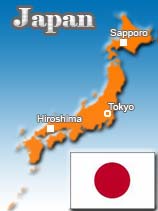 Tokyo - Never before has the Japanese economy been buffeted so severely by financial sources outside the country.
Foreign investors fled the world's second largest economy on Friday in panic, triggering the biggest daily losses percentage-wise since the Black Monday crash in October 1987.
The technology-heavy benchmark Nikkei 225 index nosedived 881.06 points, or 9.62 per cent, closing at 8,276.43, the lowest in more than five years.
"Investor sentiment froze into pure horror," one trader said.
Fears that the seemingly never-ending financial turmoil will grow into a global crisis with harsh effects for the real economy are underlying panic selling on Japan's stock market, causing the Nikkei to lose 27 per cent of its value in the past seven trading days.
Japan's exporters are already feeling the crunch. The country's leading carmaker, Toyota, suffering from shrinking demand in the United States and Europe, was forced to significantly lower its profit forecast for the current business year, media reports said.
At the same time, economists at Nomura Securities Friday revised their growth prognosis downwards for Japan, the United States and Europe, owing to the threatening combination of crumbling US and European banks, tumbling markets, and a strong yen.
It was likely that all three regions were already in a recession, they said. "Moderate stability" could only be expected by the second half of 2009, real economic recovery not before 2010.
Meanwhile, the Japanese government is considering yet another "super emergency programme," as one member of the ruling Liberal Democratic Party put it, to kick-start the ailing economy.
Still, not everything is doom and gloom in Japan, although the crashing markets may lead to that conclusion. Experts believe that China, Japan's largest trade partner, is still in pretty good shape, offering a glimmer of hope.
But what if the crisis starts to engulf Asia as well? In particular the region's emerging economies depend on a free flow of finances and investment.
Asia, which has become Japan's most important export market and production location, crumbling and bogged down in a prolonged crisis, would be a true horror scenario for Japan.
The going-under of New City Residence, a property trust fund, is regarded as a sure sign that Japan, which believed itself mostly safe from the US subprime crisis, has been drawn deeply into the maelstrom.
Market participants were shocked as property trust funds not only scored big gains over the past years but also were held by many financial institutions.
Adding to the woes is the collapse of Yamato Life Insurance, a well-established, mid-sized Japanese insurer. On Friday, Yamato had to file for bankruptcy with debts amounting to 269.5 billion yen (2.7 billion dollars).
It is not only the first bankruptcy of a Japanese insurer in seven years, but also the first collapse of a financial insitution directly related to the global financial meltdown.
While government officials, pointing at Yamato Life's risky business model, said the bankruptcy was an isolated case, economists do not rule out further failures.
Last month bankruptcies in Japan grew by 34 per cent year-on-year, the biggest increase in eight years.
Burnt by their own experiences during the past decade, Japanese banks are extremely cautious granting credit, which led to a series of bankruptcies in the property sector. That again has a knock-on effect on regional banks, several of which are said to be crumbling already.
At this point, nobody can say how far Japanese stocks will plummet before buying may be feasible again. One result of the recent value destruction in the markets is that shares in Japanese companies can be had for bargain prices, despite their enormous cash stockpiles and a decade of reforms and restructuring.
But if experts are to be believed, this situation is as unlikely to continue long-term as did the lofty heights of the stock market bubble. (dpa)
TopNews Hindi
- FSSAI की शराब कार्रवाई: मैकडॉवेल्स नंबर 1, Old Monk, Antiquity Blue, Royal Challenge पर बैन
- Karuppu, Parasakthi, Thaai Kizhavi, Blast and Kara Among Best Tamil Movies for 2026
- Anupama, YRKKH, Vasudha, Tum Se Tum Tak: सबसे ज़्यादा देखे जाने वाले धारावाहिक
- 2026 FIFA World Cup Current Rankings and Betting Odds for Sports Betting Fans
- JEE Main 2026: Exam Dates, Eligibility, Syllabus जेईई मेन 2026 परीक्षा की तारीखें, योग्यता, सिलेबस

