Washington, Apr 15 : By isolating the parasite behind honeybee colony depopulation syndrome, also known as colony collapse disorder in the USA, scientists have found a possible cure for the infection.
Spanish researchers isolated the parasite Nosema ceranae (Microsporidia) from professional apiaries suffering from honeybee colony depopulation syndrome, and found that it could be the only cause of the disease.
Sydney - Big game hunters would be allowed to bag 25 mature saltwater crocodiles a year in the far north of Australia under plans outlined Wednesday. "It's an industry, and we can have a look at it," Northern Territory Environment Minister Alison Anderson told reporters in Darwin.
But Anderson has rejected calls for a cull that would cut the crocodile population from around 80,000 to half that number.
Beijing - China on Wednesday launched a satellite into orbit for use in a global navigation system, the official Xinhua news agency said. A Long March 3C carrier rocked took off successfully from China's space centre Xichan in Sichuan province shortly after midnight, carrying the second satellite for China's Compass navigation system.
Washington, April 15 : A new analysis has determined that the threat of global warming can still be greatly diminished if nations cut emissions of heat-trapping greenhouse gases by 70 percent this century.
The analysis was done by scientists at the National Center for Atmospheric Research (NCAR).
While global temperatures would rise, the most dangerous potential aspects of climate change, including massive losses of Arctic sea ice and permafrost and significant sea-level rise, could be partially avoided.
London, Apr 15 : A new study of thousands of breeds of apple trees has tried to explain why leaves change colour in autumn.
The study bolsters a claim that red foliage evolved as a warning signal to insects in search of a winter home.
According to a theory first proposed by the late English evolutionary biologist, W. D. Hamilton, red-pigmented leaves are a clear sign of health and an indication that a tree has enough energy to fill future leaves with unappetising toxins.
Washington, April 15 : A Duke University professor and his graduate student have discovered a universal principle that unites the curious interplay of light and shadow on the surface of your morning coffee with the way gravity magnifies and distorts light from distant galaxies.
According to the researchers, scientists will be able to use violations of this principle to map unseen clumps of dark matter in the universe.
Light rays naturally reflect off a curve like the inside surface of a coffee cup in a curving, ivy leaf pattern that comes to a point in the center and is brightest along its edge.
 Spanish researchers isolated the parasite Nosema ceranae (Microsporidia) from professional apiaries suffering from honeybee colony depopulation syndrome, and found that it could be the only cause of the disease.
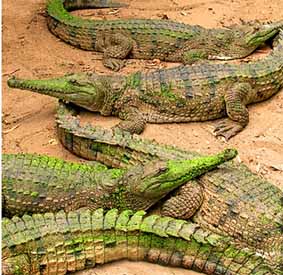 Sydney - Big game hunters would be allowed to bag 25 mature saltwater crocodiles a year in the far north of Australia under plans outlined Wednesday. "It's an industry, and we can have a look at it," Northern Territory Environment Minister Alison Anderson told reporters in Darwin.
 Beijing - China on Wednesday launched a satellite into orbit for use in a global navigation system, the official Xinhua news agency said. A Long March 3C carrier rocked took off successfully from China's space centre Xichan in Sichuan province shortly after midnight, carrying the second satellite for China's Compass navigation system.
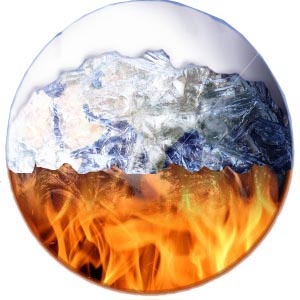 Washington, April 15 : A new analysis has determined that the threat of global warming can still be greatly diminished if nations cut emissions of heat-trapping greenhouse gases by 70 percent this century.
 London, Apr 15 : A new study of thousands of breeds of apple trees has tried to explain why leaves change colour in autumn.
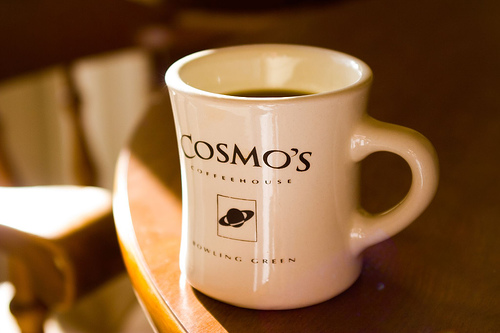 Washington, April 15 : A Duke University professor and his graduate student have discovered a universal principle that unites the curious interplay of light and shadow on the surface of your morning coffee with the way gravity magnifies and distorts light from distant galaxies.
