Vienna - Josef Fritzl, the Austrian accused of having raped and imprisoned his daughter, has said he also kept his mother locked up in his house, Austrian media reported Thursday.
According to members of his family, Fritzl, 73, frequently insulted his mother and locked her up in a room in his house, where she died in 1980. He also bricked up the room's window, News magazine reported.
Police discovered last spring that the suspect had kept his daughter Elisabeth Fritzl, 42, in a cellar at his home in Amstetten for 24 years, where he had seven children with her.
Tokyo - Japanese Prime Minister Taro Aso on Thursday announced a new economic stimulus package worth about 26.9 trillion yen (276.33 billion dollars) to battle the impact of the global financial crisis.
"The most important thing is to allay concerns about people's livelihoods," Aso said at a press conference.
The government stimulus package, the second since August, includes 2 trillion yen in financial assistance for all households to jump-start consumption and up to 6 million yen in tax breaks for housing loans for 10 years.
Pamplona - Several people were injured on Thursday in a car- bomb attack in the northern Spanish city of Pamplona, local authorities reported.
A vehicle exploded in a car park in the grounds of the University of Navarra in Pamplona, capital of the Navarra province which borders on the separatist Basque region.
Witnesses said several vehicles were set on fire by the explosion, and nearby buildings were substantially damaged.
Baghdad - Iraq will sign a long-term security agreement with the US only if the latter agrees to compromise on Iraqi-proposed amendments, the semi-official al-Sabah newspaper said Thursday.
The Iraqi government had handed the US embassy in Baghdad an amended draft on Tuesday, although both parties had agreed in mid- October that the last draft was final.
The changes proposed by the cabinet would clarify under what circumstances US troops would be answerable to Iraqi law.
Washington, Oct 30 : Chemists at the University of Warwick and the John Innes Centre have uncovered a new signalling molecule, which can unlock hundreds of new antibiotics from the DNA of the Streptomyces family of bacteria.
Researchers have already developed methods to find and exploit new pathways for antibiotic production in the genome of the Streptomyces family and many Streptomyces bacteria are being used industrially to produce current antibiotics.
It has long been believed that the relatively unstable butyrolactone compounds represented by "A-factor" were the only real signal for stimulating such pathways of possible antibiotic production
London, Oct 30 : An international poll has come out with varied results on one of the most debatable questions among scientists— when human life "begins" biologically?
The results come prior to a controversial constitutional amendment next week in Colorado, which will confer legal rights on embryos at the point of fertilisation.
Out of the 650 votes polled in, only 22.7pct of voters selected fertilisation as the point when human life begins.
But, detection of foetal heartbeat scored the highest, with 23.5 pct vote in its favour, and at the third position was implantation of the embryo in the womb lining with 15pct.
 Vienna - Josef Fritzl, the Austrian accused of having raped and imprisoned his daughter, has said he also kept his mother locked up in his house, Austrian media reported Thursday.
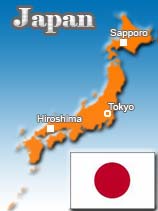 Tokyo - Japanese Prime Minister Taro Aso on Thursday announced a new economic stimulus package worth about 26.9 trillion yen (276.33 billion dollars) to battle the impact of the global financial crisis.
 Pamplona - Several people were injured on Thursday in a car- bomb attack in the northern Spanish city of Pamplona, local authorities reported.
 Baghdad - Iraq will sign a long-term security agreement with the US only if the latter agrees to compromise on Iraqi-proposed amendments, the semi-official al-Sabah newspaper said Thursday.
