World Economy
 Bratislava - Slovakia's inflation declined for the second time this year as the central European country prepares to switch to the euro on January 1, government data showed Thursday.
 Manila - Developing Asia's economic growth will slow down to 5.8 per cent in 2009 as the impact of the global financial crisis spreads to emerging markets, the Asian Development Bank (ADB) warned on Thursday.
 Washington - The US House of Representatives Wednesday approved a 14-billion-dollar emergency loan to keep the country's car industry out of bankruptcy, sending the bill to a more skeptical Senate.
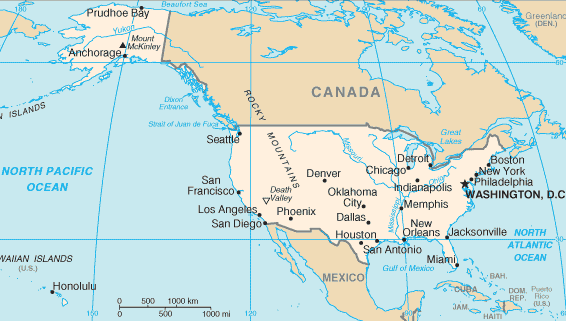 Washington - The US Treasury on Wednesday said efforts to stabilize the financial system were making good progress but legislators complained that billions of dollars were being spent with little oversight and few results for the wider struggling economy.
 Prague - The Czech parliament's lower house Wednesday approved a 2009 budget with a deficit of 1.6 per cent of gross domestic product (GDP), well below the
 TopNews Hindi
- Karuppu, Parasakthi, Thaai Kizhavi, Blast and Kara Among Best Tamil Movies for 2026
- Anupama, YRKKH, Vasudha, Tum Se Tum Tak: सबसे ज़्यादा देखे जाने वाले धारावाहिक
- 2026 FIFA World Cup Current Rankings and Betting Odds for Sports Betting Fans
- JEE Main 2026: Exam Dates, Eligibility, Syllabus जेईई मेन 2026 परीक्षा की तारीखें, योग्यता, सिलेबस
- Geojit ने Apollo Hospitals पर BUY कॉल दोहराया, Share Price Target Rs. 9,587

