Pakistan coalition leaders stand divided on judges' issue
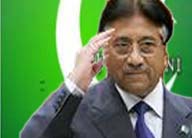 Islamabad- Pakistan's main ruling coalition partners on Friday failed to iron out their lingering differences over the reinstatement of more than 60 sacked judges and possible impeachment of President Pervez Musharraf.
Asif Ali Zardari, who succeeded ex-premier Benazir Bhutto as the chairman of Pakistan People's Party (PPP), met former prime minister Nawaz Sharif at his Raiwind estate in Lahore only a day after holding inconclusive talks on the contentious issues.
"Both parties share a common viewpoint, but at the same time there exists some differences of opinion," Khawaja Asif, a senior lawmaker from Sharif's Pakistan Muslim League-Nawaz (PML-N), told journalists after the four-hour-long meeting.
"(However) the PPP and PML-N are making sincere efforts to find a way out," Asif said, adding that the leaders would be holding two or three rounds of talks, probably early next month.
Musharraf purged the senior judiciary of independent-minded judges, including chief justice Iftikhar Chaudhry, by promulgating emergency rule on November 3 to preempt a Supreme Court decision on challenges to his controversial re-election a month earlier.
Zardari and Sharif formed a coalition government three months ago after their parties routed the political supporters of Musharraf in the February 18 general elections, and pledged to restore the judges through a parliamentary resolution.
The coalition partners failed to honour their commitment when they reached a deadlock after Zardari's party proposed a constitutional reforms package for the judges' reinstatement.
After failing to meet the self-imposed May 12 deadline for the return of the judiciary, Sharif pulled his party members out of the cabinet but kept the coalition intact by supporting the PPP-led government on "case-to-case basis."
Critics say Zardari is reluctant to reinstate Chaudhry because he could again take up legal challenges to a controversial law passed by Musharraf that provided for quashing cases against selected holders of public offices. Zardari has recently been acquitted of numerous graft charges under the same law.
About impeachment of Musharraf, who toppled Sharif's government in 1999, Asif said the coalition leaders had a consensus that the beleaguered president had to go, but they wanted to follow separate courses of action.
Musharraf, who is facing demands to step down, has also been threatened with trial for treason by political parties and thousands of lawyers rallying for the restoration of the senior judges.
Zardari favours putting indirect pressure on the embattled president, a key ally in the US-led war on terror, by cutting down his powers and forcing him to quit voluntarily, but Sharif desires his immediate ouster and trial.
Sharif's party claims that the ruling coalition has the two-thirds majority in the parliament needed to impeach the president, but the PPP denies having the required numbers.
Musharraf says he would accept any decision taken by the parliament against him, but has categorically stated that he had no immediate plans to resign or go into exile, as repeatedly reported in the local media. (dpa)

