Kremlin-term law paves way for possible Putin comeback
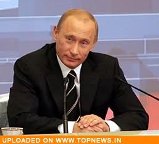 Moscow - The elections are only half a year gone, but open season in Russian politics is back.
Russians are now betting on the outcome of the machinations that are currently going on behind the Kremlin's high walls - or are they inside the White House, Moscow's looming government building? At times, it is hard to tell.
A Kremlin bill lengthening the term a Russian president may serve from four to six years was overwhelmingly approved 392 to 57 on Friday by Russia's lower house of parliament, a body dominated by the pro-Kremlin party United Russia.
Only 57 deputies, all from the Communist party, voted against.
It seems clear the lawmakers are not in charge, although they are working overtime these days. The Duma fast-tracked the legislation to lengthen the presidential terms through the three necessary readings in just over two weeks, since President Dmitry Medvedev's state-of-the-nation speech on November 5.
Meanwhile, Duma deputies worked through the night to draft tax laws, announced by Prime Minister Vladimir Putin's address at his party United Russia's congress on Thursday.
So what, besides patriotism, is driving the work-ethic of Russia's lawmakers?
Most analysts and Russian media are guessing that the answer is none other than Putin, the shape-shifting former KGB-man and president who stepped down as head of state in May. Under constitutional rules, he was barred from running for a third consecutive term in office. Instead, he became prime minister, and head of the United Russia party.
Putin of course backed the term extensions this week, but called it "premature" to say who might benefit.
The law will apply to the next elected president - not Medvedev.
The enthusiastic support of the United Russia deputies for the move has become the subject of some irony in Russian political circles.
"Nobody fully thought through this scenario, which proposes a six-year term ... and then deputies vote for seven," Boris Makarenko, the head of the Moscow-based Center for Political Technologies, said wryly after the second reading of the bill on Wednesday.
"It is all a result of some contract between Medvedev and Putin. For whom? God knows! They probably don't know themselves!," he said. "So lawmakers can compete without any (doubt about their) fidelity to the president."
But Putin adeptly shifted attention from the issue of presidential terms at his party's congress on Thursday.
Russia's economy, he said, will not emerge unscathed from the financial turmoil, and pledged the government would not allow a repeat of the poverty caused by the Soviet Union's collapse in 1991, and the default of the ruble in 1998.
"The crisis which began as financial has turned before our eyes into an economic crisis," Putin declared.
The country is faced with "a fair question: what is going to happen to us?" he said at the congress. "The crisis will test the mettle of every country, their ability to defend the fortunes of their citizens, the economy and the national currency.
"That challenge stands before Russia today."
The cat was out of the bag. Putin's speech represented a distinct change of tack for the Medvedev-Putin administration, that was perhaps more groundbreaking than Medvedev's announcement two weeks earlier, analysts agreed Friday.
Whereas a month ago the Kremlin line had been to downplay the seriousness of the economic turmoil, by for example issuing an edict that media avoid using the words "crisis" and "collapse," Russia's executive now seems to facing the issue head-on.
The World Bank has cut its growth forecasts for Russia from near 7 per cent to 3 per cent. Key sectors such as construction, metals and mining are bracing themselves for massive lay offs by the end of the year. Rumors of pay arrears and imminent lay-offs are imminent.
After wide-ranging speculation of Putin's planned return to the Kremlin ahead of his keynote speech on Thursday, observers were forced to merely note his silence on the issue.
For now, the consequences of the financial crisis have been slow to affect Russia's real economy. While stocks have been stripped of over 70 per cent of their value since May, the number of people who have their money such places remains limited.
So Putin and Medvedev have succeeded, until now, in presenting the crisis as imported from the West, from which Russia will emerge ahead.
But analysts speculate that a downturn in the real economy could undermine the ruling duo's sky-high popularity - and lead to cracks in their hitherto concrete grip on power.
The "power vertical," as the Russians call it, that Putin built up in his eight years as president could then be under threat from the very oligarchs that constitute it, if their economic interests crumble.
In such a case, analysts say, Putin may oust his successor and present himself as the only man to do the job.
United Russia deputy Sergei Markov, who heads the Kremlin- connected Institute of Political Studies, told Deutsche Presse- Agentur dpa, "If Medvedev fails to deal with the economic crisis, which is getting worse, Putin can come back as president." (dpa)
TopNews Hindi
- Karuppu, Parasakthi, Thaai Kizhavi, Blast and Kara Among Best Tamil Movies for 2026
- Anupama, YRKKH, Vasudha, Tum Se Tum Tak: सबसे ज़्यादा देखे जाने वाले धारावाहिक
- 2026 FIFA World Cup Current Rankings and Betting Odds for Sports Betting Fans
- JEE Main 2026: Exam Dates, Eligibility, Syllabus जेईई मेन 2026 परीक्षा की तारीखें, योग्यता, सिलेबस
- Geojit ने Apollo Hospitals पर BUY कॉल दोहराया, Share Price Target Rs. 9,587

