Unregistered refugees allegedly persecuted in Bangladeshi camp
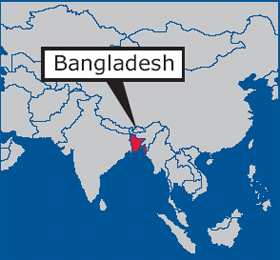 Dhaka - Unregistered Rohingya refugees face persecution in Bangladesh's south-eastern Cox's Bazar district, where tens of thousands of the Myanmar refugees have been living in squalid camps for years, an international aid organization alleged Thursday.
"Long-suffering Rohingya face unacceptable abuse, forced displacement, intimidation and abuse in Kutupalong makeshift camp in Bangladesh," Medecins Sans Frontieres (MSF), which treated numerous people for injuries, said in a press statement issued from its Asia office in Bangkok.
Local authorities forcibly displace the refugees from their shelters, MSF said, adding that the organization has witnessed many homes destroyed.
Asked for comment, district chief administrator Gias Uddin Ahmed told the German Press Agency dpa that authorities increased pressure to prevent the influx of Rohingyas from the adjoining Rakhine state in Myanmar, from where they are driven by the country's military junta.
Dismissing the allegations of intimidation, Ahmed said that the authorities recently stepped up vigilance on the border to thwart entries by Myanmar border forces.
Bangladeshi security forces pushed back some 212 Myanmar nationals in June as the influx of Rohingya refugees increased over the past months.
The MSF said an estimated 25,000 people have flocked to the Kutupalong makeshift camp, which was constructed a year ago next to an official camp run by the United Nations High Commission for Refugees and is supported by the Bangladesh government.
Instead of finding help, the refugees were told could live neither next to the official camp nor on adjacent land. They have nowhere to go and no way to meet their basic needs, MSF said.
"I cannot move. If we go to collect wood we will be arrested, if we collect water we will be beaten, if we move our house where should we go," an unnamed resident of the camp was quoted in the MSF statement.
"I was working. When I went back to my shelter I found it totally destroyed. An inspector was there with nine or 10 people, I asked why they destroyed my house. They showed me a fish-cutter and said if you say anything I'll cut you", another camp resident was quoted as saying.
In March 2009, MSF conducted an assessment of the rapidly rising numbers in the makeshift camp. More than 20,000 people were living in dire humanitarian conditions, suffering from malnutrition, poor water and sanitation, and no assistance, it said.
Over 22,000 Muslim Rohingyas, a people who for decades have fled persecution and discrimination they face in Myanmar, have been living in two official camps - Kutipalong and Nayapara - in the district.
Bangladesh has asked the Myanmar authorities to begin the repatriation of Rohingyas, but that has stalled for more than five years now.
Unofficial counts say more than 200,000 other Myanmar nationals, mostly minority Muslims, have taken refuge in Bangladesh over the past decade. (dpa)

