London, April 10 : An Antarctic balloon experiment has revealed that dramatic dust-swaddled stellar nurseries seem to be the main sources of a diffuse background light found in all directions in the Universe.
Astronomers have long suspected that individual galaxies are responsible for a diffuse glow of long-wavelength infrared light, called the far infrared background, that was detected by NASA's Cosmic Background Explorer satellite in the 1990s.
London, Apr 10 : In a landmark discovery, scientists have found that the parasites responsible for leishmaniasis does reproduce sexually, and that they do it inside sand flies - a natural vector of Leishmania.
Leishmania parasites cause widely differing forms of the disease, some of which horrific skin infections, and others affect the internal organs and can cause death.
The new finding may open up new opportunities for fighting the deadly disease.
London, April 10 : A study has revealed what a snake eats affects the strength of its venom, suggesting that anti-venom can be developed specific to a certain snake''s location or diet.
Axel Barlow, a Bangor university student, says that his finding is particularly based on his studies into saw-scaled vipers, which have evolved to eat scorpions.
He has found that such snakes have venom that was more lethal to scorpions.
He hopes that his discovery may help reduce the incidences of deaths due to snakebites.
Washington, April 9: Engineers at Oregon State University (OSU) in the US are using an ancient life form called diatom to create one of the newest technologies for solar energy, in systems that may be simple enough to build compared to existing silicon-based solar cells.
These tiny, single-celled marine life forms have existed for at least 100 million years and are the basis for much of the life in the oceans, but they also have rigid shells that can be used to create order in a natural way at the extraordinarily small level of nanotechnology.
London, April 9 : A solar-powered oven made from cardboard is the 50,000-pound winner of a contest to find the world''s greenest invention.
The invention bagged the FT Climate Change Challenge crown after beating 300 other creations, including a food additive, which stops cows passing wind.
Kenya-based entrepreneur Jon Bohmer a Norwegian, set up Kyoto Energy with his Kenyan wife Neema, and has used his own money to fund the project.
 London, April 10 : An Antarctic balloon experiment has revealed that dramatic dust-swaddled stellar nurseries seem to be the main sources of a diffuse background light found in all directions in the Universe.
 Wa
Wa London, Apr 10 : In a landmark discovery, scientists have found that the parasites responsible for leishmaniasis does reproduce sexually, and that they do it inside sand flies - a natural vector of Leishmania.
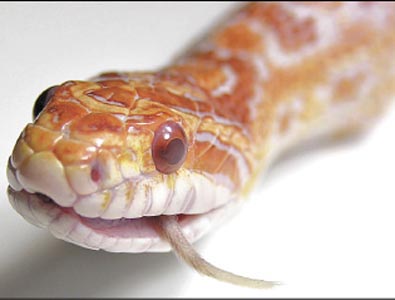 London, April 10 : A study has revealed what a snake eats affects the strength of its venom, suggesting that anti-venom can be developed specific to a certain snake''s location or diet.
 Washington, April 9: Engineers at Oregon State University (OSU) in the US are using an ancient life form called diatom to create one of the newest technologies for solar energy, in systems that may be simple enough to build compared to existing silicon-based solar cells.
 London, April 9 : A solar-powered oven made from cardboard is the 50,000-pound winner of a contest to find the world''s greenest invention.
