Canada Starts Global Research To Find Dengue Cure
 With no medications available for deadly dengue fever and the disease assuming endemic proportions in nations such as India and extending to the US for the first time during the last 40 years.
Now, a multi-million dollar research has been launched at Canada's McMaster University to contain the virus.
Prof Mark Loeb of the Michael G. DeGroote School of Medicine at the university has been granted $10 million by the US National Institutes of Health to carry out an international research on dengue.
Around 9,000 samples from India, Honduras, Nicaragua, Mexico, Columbia, Thailand, and Vietnam will be brought for analysis.
Dengue takes lives of approximately 25,000 people every year worldwide, with the infection spreading from nine to over 100 nation during the last 40 years. Just last week, the US also reported its first cases of dengue fever in four decades in Florida.
At present, no medications are available to fight the infection.
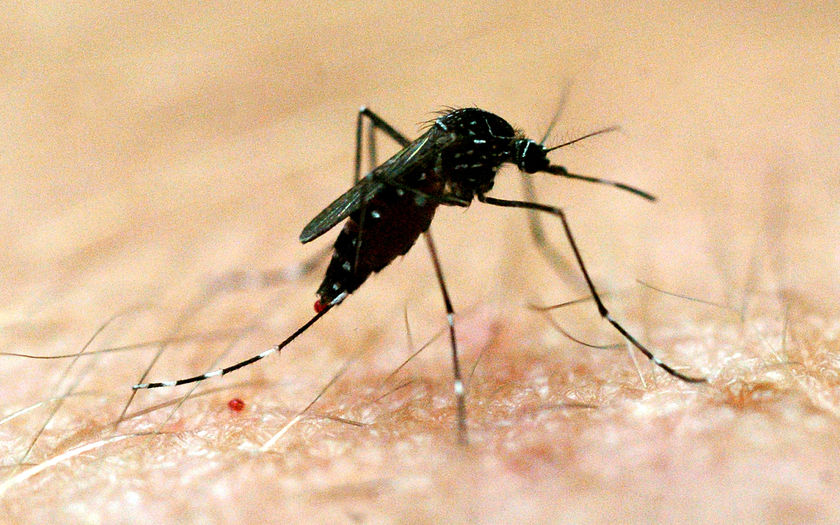
Caused by the dengue flavivirus transmitted by a mosquito bite, infection can lead to fever, a flu-like condition, to dengue hemorrhagic fever or dengue shock syndrome which can be life-threatening.
Prof Loeb in a university stated, "We will get a blood sample from people who have been infected with dengue and compare them to milder cases, looking for genetic variants - such as vitamin D receptors - which have been previously described as important factors."
He added, "Dengue used to be endemic in North America. There is concern now that global warming may eventually contribute to a resurgence of dengue.''
During his 5-year research, Loeb will focus on three distinct groups: individuals infected with severe, hemorrhagic dengue fever, others with milder dengue fever and a third group who are infected but show no symptoms, the statement said.
According to WHO, around 40% of the world's population lives in regions where there is a risk of dengue transmission. (With Inputs from Agencies)

