London, March 28 : The restoration work on William Shakespeare's portrait, 100 years after his death, actually removed a superimposition that could have revealed an insight into the changing appearance of one of the world's greatest playwright.
When art conservators joined hands to restore two rare portraits of Shakespeare, they thought they were removing paint daubed on the canvases more than 100 years after the Bard's death to reveal "authentic" portraits beneath.
According to a report in the Independent, it has emerged that they were, in fact, wiping away priceless insights into the changing appearance of Shakespeare.
London, Mar 20 : A rare portrait of William Shakespeare, believed to be the only surviving portrait, could actually be a painting of 17th century courtier Sir Thomas Overbury, claims an expert.
The Jacobean painting from the family collection of art restorer Alec Cobbe was believed to be of the Shakespeare because it closely resembled the engraving in Shakespeare''s First Folio.
London, Mar 18 : An academic claims to have unearthed six previously unrecognized works of legendary playwright William Shakespear
Dr. John Casson, an independent researcher and psychotherapist, has found Shakespeare''s first published poem the Phaeton sonnet, his first comedy Mucedorus, and his first tragedies Locrine and Arden of Faversham.
London - A portrait of William Shakespeare (1564-1616), believed to be the only surviving painting made of him during his lifetime, was unveiled in London Monday.
The artwork is believed to have been painted in 1610, six years before Shakespeare's death, when he was aged 46. The identity of the painter is unknown.
The newly-identified work remained in the same family for centuries and was inherited by art restorer Alec Cobbe, scholars told a London news conference Monday.
London, Mar 8 : A portrait which was painted in 1610 and owned by a family for nearly three centuries will be claimed as the only known picture of William Shakespeare painted during his lifetime.
The declaration, which will be made tomorrow, shall be supported by the world's foremost expert on Shakespeare, Stanley Wells, emeritus professor of Shakespeare studies at Birmingham University and general editor of the Oxford Shakespeare series for 30 years.
London, Dec 3 : William Shakespeare might have stopped writing because he had lost his sight, a leading playwright has claimed.
Shakespeare, who died in April 1616, stopped writing three years before his death in 1613, and Thomas suggests that years of writing by candlelight would have left Shakespeare with bad sight.
Thomas has just written a play, For All Time, about why the bard left London for Stratford-upon-Avon in 1613.
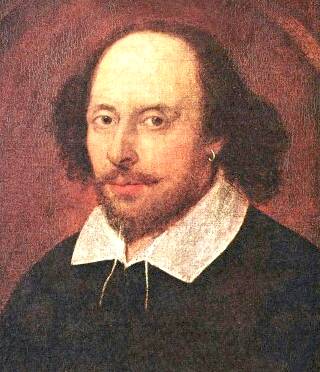 London, Mar 20 : A rare portrait of William Shakespeare, believed to be the only surviving portrait, could actually be a painting of 17th century courtier Sir Thomas Overbury, claims an expert.
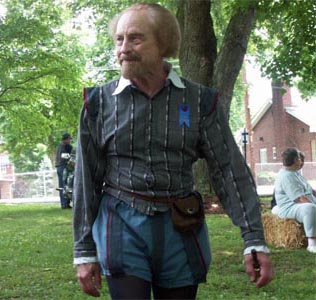 London, Mar 18 : An academic claims to have unearthed six previously unrecognized works of legendary playwright William Shakespear
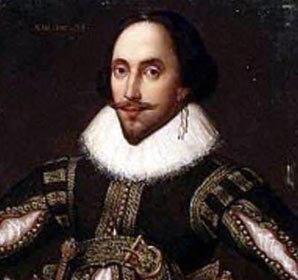 London - A portrait of William Shakespeare (1564-1616), believed to be the only surviving painting made of him during his lifetime, was unveiled in London Monday.
 London, Mar 8 : A portrait which was painted in 1610 and owned by a family for nearly three centuries will be claimed as the only known picture of William Shakespeare painted during his lifetime.
