Merkel "opens up" private life for campaign
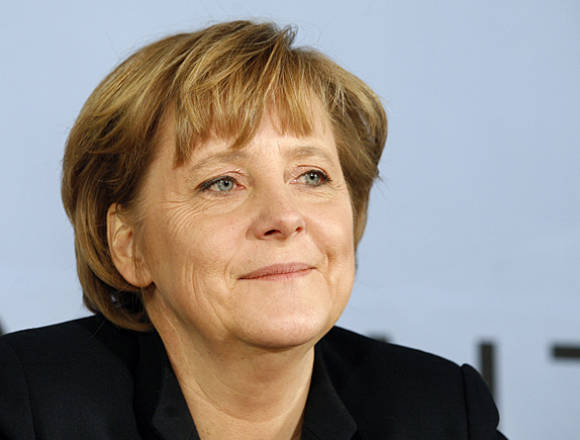 Berlin - German Chancellor Angela Merkel has been offering voters an unprecedented glimpse into her reassuringly dull private life, including an account of how she goes shopping at a normal supermarket.
In an election campaign with no really divisive policy debates, the media have gratefully picked up revelations about Merkel's home life and that of her main challenger, Frank-Walter Steinmeier of the Social Democrats.
Germany goes to the polls this Sunday.
In four years as chancellor, Merkel has been careful to separate work and home life.
Even in gossipy Berlin, few people knew that Merkel, who is childless, had become a kind of step-grandmother.
Her husband, Joachim Sauer, became a grandfather two and a half years ago and the little boy Kasimir is likely to regard Merkel as one of his grannies, the chancellor recently revealed.
She also told a women's magazine, Emma, in a pre-election interview that she writes a shopping list every Friday for her husband to take to the supermarket, adding that she feels watched when she shops herself.
Merkel described an incident in which she went shopping for canned artichokes in a supermarket, and other shoppers were overly helpful, directing her to the fresh vegetables department instead.
She would have preferred to potter on her own.
"Sometimes I'm grateful to be given a tip. But sometimes I would like to be left on my own," she said.
The great German public has also learned this week that at school, her maiden surname, Kasner, was converted into a nickname, Kasi.
Merkel is her surname held over from her first marriage. The daughter of an East German Lutheran minister first kissed a boy at the age of 16, and as a Christian still recites grace before meals, we have been told.
Her re-election campaign team invited interviews by gossipy downmarket German magazines and newspapers, but Merkel apparently drew the line at letting the media into her home.
She does not let journalists photograph her in her central Berlin apartment or in her holiday house in the countryside north of the city.
But Der Spiegel, the news weekly, quoted someone who had allegedly seen the flat, describing it as not elegantly furnished at all.
The Spiegel account claimed it looked more like a student flat, with a Formica table, plastic laminate chairs, posters on the wall and a CD player on the floor because there is no shelf for it.
Steinmeier, Germany's foreign minister, who has been fairly discreet in the past too, did invite a gossip magazine to photograph him in the garden at home.
He and his wife, Elke Buedenbender (she kept her maiden name when they married), posed during what was obviously a delightful outdoor breakfast and Steinmeier described his home-handyman talents.
The Social Democrat's story, which has now appeared in several variants, was that he came home one night after midnight and his heart melted for his daughter who needed a new set of shelves in her room.
Though tired, he got out the electric drill and screwed the shelves, bought from low-cost furnisher Ikea, to the wall.
In other ways, Steinmeier has worked hard to shake off his bureaucrat image, such as publishing photographs from his holidays in the Italian region of South Tyrol and team pictures from his days as an amateur football player.
He said that as a player in his home region of Lipperland, in the centre of Germany, he played midfield defence, scored very few goals but was the team's playmaker in an early display of leadership.
His childhood name name was Prickel, he said, but neither he nor anyone else can remember why.
Other party leaders have also brought more of their private lives into the open.
Guido Westerwelle, head of the Free Democrat Party, praised his gay partner, Michael Mronz, in the gossip magazine Bunte, saying Mronz had been "an exemplary help" to him.
Westerwelle added that he would very much like to have children.
Renate Kuenast of the Greens even agreed to let cameras trail her as journalists tested her practical abilities.
That got her into trouble with animal-rights activists. She caught a fish and gave it three quick whacks with a stick to put it out of its misery. The pro-animal lobby accused her of cruelty.
All this exposure of the private is unusual for Germany, where the media generally remains silent about politicians' homes, love lives and holiday experiences.
It still falls well short of the glare of attention given to Barack Obama and his family in the US White House or to French President Nicolas Sarkozy and his wife Carla Bruni.
Steinmeier may have described the shelves he put up for his daughter Merit, but has never permitted her photo to appear in the media. (dpa)

