Confederations Cup transport derailed by die-hard taxis By Clare Byrne
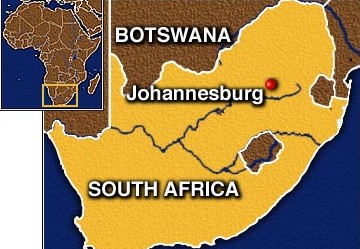 Johannesburg - South Africa's government has bowed to pressure from gun-toting taxi owners and pulled the plug on plans to showcase a new, safer bus-based commuter service at the upcoming Confederations Cup, the German Press Agency learned late Wednesday.
Four South African cities are taking advantage of South Africa's hosting of the World Cup next year to take a wrecking ball to the notoriously dangerous 16-seater minibus taxis that currently ferry the masses in the absence of decent rail or bus services.
By kickoff time for the first game in June 2010, Johannesburg, Cape Town, Pretoria and the southern city of Port Elizabeth plan to have hundreds of spanking new, full-length buses gliding along dedicated median bus lanes at regular intervals.
The owners of the minibus taxis, many of them bone-jarring rustbuckets, are due to become part owners in the bus rapid transit (BRT) systems, which have revolutionized public transport in Colombia, Brazil and other parts of the developing world.
But some taxi owners, in Johannesburg and Cape Town particularly, fearing losses in revenue and jobs, have refused to come onboard and are threatening to disrupt the World Cup if the government forges ahead.
Several people are killed each year in shootouts between rival taxi drivers and owners, giving an edge to the threats.
The first phase of Johannesburg's BRT, the country's biggest, had originally been scheduled to be up and running for the Confederations Cup, the eight-nation pre-World Cup test tournament that takes place from June 14 to 28.
While it became obvious that deadline was unattainable after President Jacob Zuma during campaigning in recent elections called a a halt to nearly all BRT work Johannesburg had hoped to showcase the system by using some of the new bus lanes and buses to move spectators.
But Eric Motshwane, a senior taxi industry official, who has been negotiating with the city on the new system, told dpa on Wednesday the proposal had been quashed by the new minister of transport, Sbu Ndebele.
"The minister has ruled out the possibility of the BRT event service for the Confederations Cup," he told the German Press Agency.
"We are now looking forward to using the taxi industry for the event service," Motshwane, who is one of the large number of taxi owners who actually support the switch to bigger buses, added.
"We (members of the Johannesburg BRT steering committee) had all hoped that the BRT would be showcased with an event service but we cannot overrule the minister," Motshwane said.
Motshwane said Gauteng province, where Johannesburg and Pretoria are located, had contracted 3,000 minibus taxis to transport fans to see the likes of Brazil and Italy in action.
Meanwhile, the deadline for Johannesburg's BRT has been pushed back to September, Motshwane said.
Johannesburg's transport Rehana Moosajee said details of the city's Confederations Cup service would only be revealed later Thursday, adding: "It's a combination of minibus taxis and buses."
A spokesman for the World Cup local organizing committee downplayed the lack of progress.
"For the Confederations Cup it's not a massive issue," Jermaine Craig, a spokesman for FIFA's World Cup local organizing committee told dpa.
"The reality is that we're not a Germany. We don't have a first world transport infrastructure," he said. "It would be great if the BRT were in place for the World Cup. We're hopeful that it will be."
For the Confederations Cup instead, six park-and-ride facilities are being set up in Johannesburg and a train station near Ellis Park stadium, where the opening game and final will be held, is being upgraded.
As for the World Cup, FIFA has threatened that, if the new buses are not in place, it will take charge of transporting the around 400,000 foreign visitors expected at the tournament.
Many of the World Cup packages being sold by FIFA's ticketing and accommodation agency Match included transport to and from the matches.(dpa)
TopNews Hindi
- आज का मौसम 29 मई: 16 राज्यों में तूफानी बारिश का अलर्ट, दिल्ली में राहत की उम्मीद लेकिन मानसून अभी दूर
- सोने और चांदी की कीमतों में मामूली गिरावट (Gold Price Declines Today), 22Karat सोना 1,56,600 रुपये प्रति 10 ग्राम
- वैभव सूर्यवंशी (Vaibhav Sooryavanshi) की IPL 2026 में राजस्थान रॉयल्स में रिकॉर्ड तोड़ बल्लेबाज़ी
- कल का मौसम: दिल्ली, हरियाणा, राजस्थान, पंजाब और उत्तर प्रदेश में अत्यधिक गर्म मौसम
- आज का मौसम: दिल्ली में भीषण गर्मी का प्रकोप, 45°C के पार पहुंचा पारा

